In the dynamic and ever-evolving world of information and communication technologies, a deep understanding of coaxial cable testing is imperative. These cables, primarily used in telecommunications and broadcasting networks, are essential for ensuring reliable and high-quality data transmission. They represent the invisible nervous system of our digital infrastructures. Their performance and reliability are not guaranteed and require rigorous testing. This deep dive into the field of coaxial cable testing will clarify their importance, the testing processes, and the tools necessary to ensure their optimal functioning.
Genesis of Coaxial Cables: Promising Beginnings
The origins of the coaxial cable date back to the design of the first telephone lines. This type of cable, known for its resistance to electromagnetic interference, consists of a central conductor surrounded by an insulating sheath and encased in a metal shield. Over time, various types of these wires have been created to meet different communication needs.
Despite their robust and durable structure, coaxial cables can degrade or develop faults after prolonged use or due to improper installation. Hence, the crucial importance of regularly testing these wires to ensure optimal signal transmission.
To carry out this essential verification, we can use a multimeter – a widely used instrument in the electronics field that allows for measuring several essential characteristics of electrical circuits such as voltage, current, and resistance. It is precisely here that we introduce our specific term: ‘test the continuity of a wire with a multimeter’.
This method primarily aims to check whether the central conductor of the cable is intact and capable of effectively transmitting signals without any discontinuity between the two ends. Indeed, any break or partial loss of the conductive material can lead to poor performance that must be addressed as soon as detected.
To ‘test the continuity of a wire with a multimeter’, one starts by selecting the mode on the multimeter that allows for this continuity measurement. Two probes are then placed at the two opposite ends of the cable. If the multimeter emits a continuous beep or displays a resistance close to zero, this indicates that the continuity is good and that the wire is functioning correctly. Conversely, in the absence of such a signal or if the displayed value is significantly different from zero, it will be useful to replace or repair the defective cable.
‘Testing the continuity of a wire with a multimeter’ is thus an essential practice for anyone working with coaxial cables – whether they are network engineers in large technology companies or telecommunications.
Beyond the complex and fascinating world surrounding the history and spectacular evolution of coaxial cables lies a simple truth for users: even the most robustly designed wires require regular checks to ensure their longevity and maximum efficiency.
Types of Coaxial Cables: Choosing the Right Ally
Coaxial cables come in several types, each suited to specific transmission needs. Here’s an overview of the main ones:
The RG-6 coaxial cable: This type of cable is widely used for residential applications and cable or satellite television systems. It offers excellent picture and sound quality due to its low signal attenuation over long distances.
The RG-59 coaxial cable: Mainly used for video surveillance, this type of cable has higher attenuation than RG-6, thus limiting its maximum range. It remains ideal for indoor installations where distances are relatively short.
The LMR (Low Loss) coaxial cable: Specifically designed for applications requiring low signal attenuation, such as wireless networks and professional radio communication. This type of cable ensures optimal transmission over long distances while minimizing signal loss.
The semi-rigid coaxial cable: Composed of a central copper conductor surrounded by a rigid metal sheath, this model is often used in the aerospace and military industries that require maximum protection against electromagnetic interference.
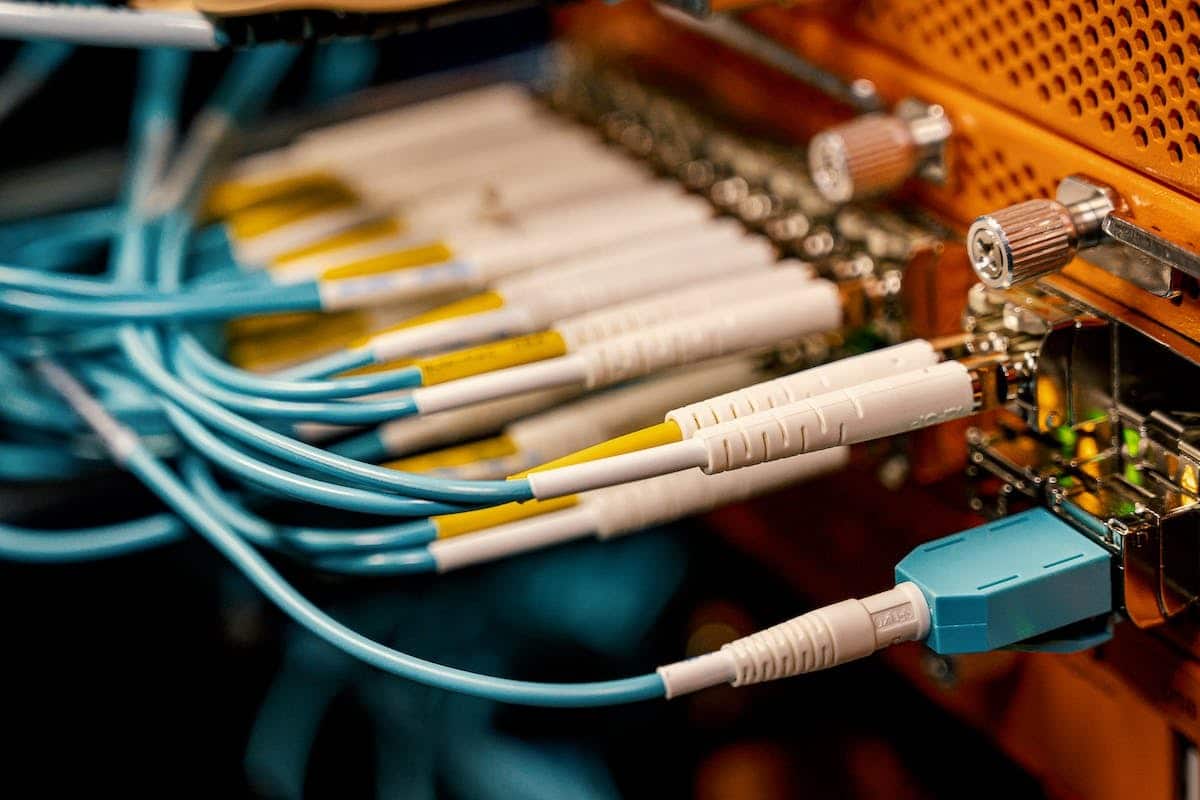
Other variations: Beyond the previously mentioned models, there are also different lesser-known types such as Twinax (notably used in computing), Triax (for professional audiovisual broadcasting), and fiber optic coaxial cable (for ultra-fast transfer rates).
Be sure to choose the type of coaxial cable based on the technical specifications of the system in which it will be used. Optimal compatibility will allow for the best possible performance in terms of image quality, sound, or transmission speeds.
Using the right type of coaxial cable and conducting regular necessary tests ensures reliable and efficient signal transmission. The various types available offer flexibility to adapt to the specific needs of residential, commercial, or industrial installations.
The next section will cover the essential steps for testing a coaxial cable accurately and reliably.
Testing Coaxial Cables: Undeniable Advantages
Coaxial cable testing offers numerous advantages to ensure optimal performance of the transmission system. Here are some of the main benefits:
Verification of cable integrity: Testing ensures that the coaxial cable is in good condition and that there are no defects, such as cuts or cracks in the outer sheath. This prevents signal interruptions or disturbances due to cable malfunction.
Detection of attenuation issues: Tests measure the signal attenuation at different frequencies to identify any excessive weakening that could lead to a loss of signal quality. By detecting these issues, it is possible to adjust amplifiers or other devices to compensate for this attenuation.
Locating weak points: Testing also allows for precise identification of areas where the signal degrades most rapidly, facilitating quick localization and resolution of potential issues.
Reduction of repair costs: By regularly testing coaxial cables, one can avoid more costly repairs.
Optimization of overall performance: Thanks to the information provided by tests, it becomes possible to improve the overall network configuration by adjusting certain parameters such as the maximum length between two connected devices or modifying gain levels.
Prevention of interference: Testing helps identify potential sources of electromagnetic interference (EMI) or radio frequency noise (RFI) that could harm the quality of the transmitted signal. By taking necessary measures to eliminate these sources, it is possible to significantly improve the reliability and stability of the transmission system.
Conducting regular tests on coaxial cables presents numerous advantages. It not only ensures a reliable and efficient signal transmission, but also avoids costly interruptions and issues related to cable deterioration over time. Investing in appropriate testing is therefore essential to maintain a high-performing system and guarantee an optimal user experience.
Testing Methods: The Key to a High-Performance Connection
The testing methods for coaxial cables are essential to ensure their proper functioning and reliability. Here are some of the main techniques used in the field:
The Time Domain Reflectometer (TDR) method: This technique involves sending an electrical signal into the coaxial cable and measuring the reflected signals when they encounter an anomaly, such as a cut or incorrect impedance. The TDR allows for precise identification of the location and nature of the defect, greatly facilitating its resolution.
Spectral analysis: This method involves analyzing the frequency of the signal transmitted through the coaxial cable. It helps identify distortions, interferences, and other issues that could affect signal quality.
Resistance measurement: This method involves measuring the electrical resistance of the coaxial cable to ensure it complies with specifications. Incorrect resistance can lead to signal loss or degradation of its quality.
Capacitance measurement: This method involves measuring the electrical capacitance of the coaxial cable, which determines its ability to carry the signal without excessive attenuation. Incorrect capacitance can lead to degradation of signal quality.
It is crucial to use these testing methods regularly to ensure the good condition of coaxial cables and avoid communication problems. Preventive maintenance is essential to guarantee optimal functioning of communication systems.
Standards to Follow: Ensuring Optimal Quality
When conducting coaxial cable tests, it is crucial to adhere to certain standards to ensure the quality and compliance of the results obtained. These standards guarantee a standardized approach in the testing process, allowing for comparison of the performance of different cables.
The first standard to consider is that established by the International Electrotechnical Commission (IEC): IEC 611. This standard defines the measurement methods for evaluating the electrical properties of coaxial cables, such as signal attenuation, capacitance, and balance between conductive wires. It also specifies the mechanical characteristics of the cable, such as its outer diameter and resistance to physical stress.
In the telecommunications field, another important standard is that developed by the Telecommunications Industry Association (TIA): TIA-568-C. This standard defines the requirements for structured cabling for Ethernet networks. It provides specific recommendations on the type of connectors to use, their physical arrangement, and their electrical performance.
Regarding the integrity testing of high-definition video signals using a coaxial cable (HD-SDI), there is also a specific directive called SMPTE ST 292. This directive sets the required conditions to ensure reliable video signal transmission over the cable in terms of amplitude, maximum supported frequency, and rise time.
You must certify networks. These standards are often based on the previously mentioned ones but may include certain adaptations or innovations in their methods and procedures.
It is essential to strictly adhere to the established standards during coaxial cable tests. This guarantees the reliability and quality of the transmitted signal within communication systems. By following these standardized protocols, it will be possible to optimize cabling efficiency and thus avoid any type of problems that could affect the overall performance of the network.
Avoiding Mistakes: Successfully Testing Coaxial Cables
When it comes to conducting coaxial cable tests, it is important to consider the common mistakes to avoid in order to ensure reliable and accurate results. Indeed, even when adhering to established standards, certain factors can interfere with the measurements taken and lead to erroneous information.
A frequent mistake is failing to properly prepare the environment in which the tests are conducted. It is necessary to minimize any sources of electromagnetic interference that could alter the results obtained. This includes keeping all electrical devices that could disrupt the signal transmitted by the coaxial cable at a distance.
Another common mistake is related to the inadequate choice of equipment used to conduct the tests. Using appropriate and calibrated equipment is crucial to ensure the reliability of the measurements taken. Regularly checking the condition of the equipment is necessary to ensure it is functioning correctly and that there are no malfunctions that could skew the collected data.
Neglecting the technical documentation provided by the manufacturer of the coaxial cable can also lead to errors during testing. Each type of cable has its own technical specifications, and it is essential to understand these before undertaking any measurements. Parameters such as characteristic resistance or impedance must be taken into account to correctly interpret the results obtained.
A final point not to be overlooked is the method of handling the cable during testing. It is important to use suitable connectors and to follow the procedures for connecting and disconnecting the cable.
It is crucial to avoid these common mistakes during coaxial cable tests to obtain reliable and accurate measurements. By adopting a methodical approach and adhering to established standards, it will be possible to ensure the quality of the signal transmitted by the cable and thus guarantee optimal performance of the network as a whole.