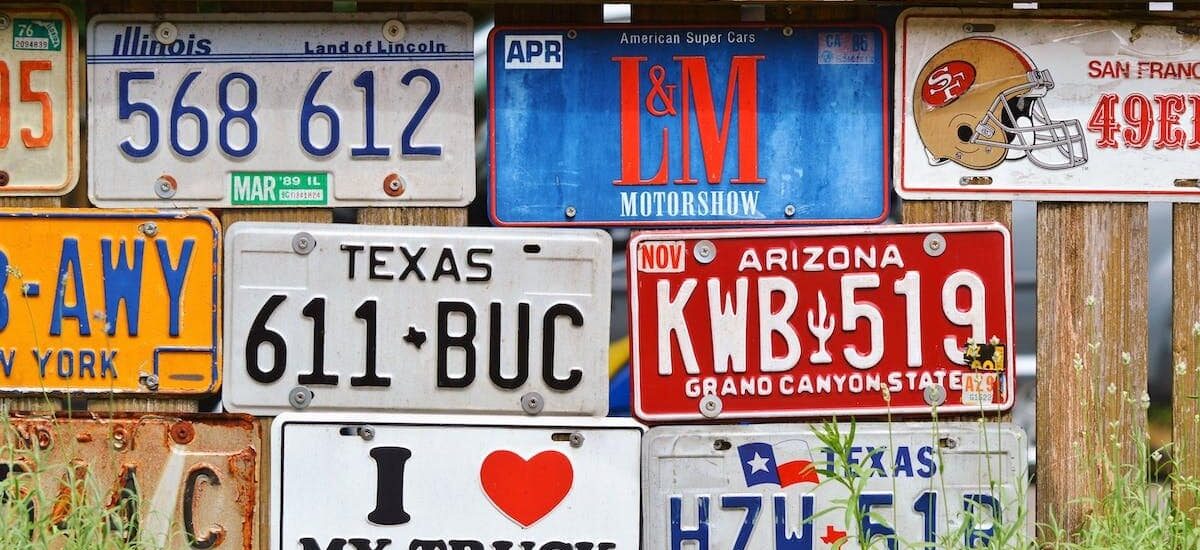
Let’s dive into the fascinating world of vehicle identification through their license plates. This complex system of letters and numbers, often taken for granted, is a goldmine of information for those who know how to decode it. From the vehicle’s origin to its year of manufacture, and its specific model, every element engraved on this small metal plate reveals a part of automotive history. But how is it possible to decipher this information at a glance? Let me guide your curiosity through the twists and turns of this exciting maze of information.
License Plates: Origin and Importance
The information inscribed on a license plate is essential for identifying a vehicle. However, when an individual seeks to go beyond vehicle identification and tries to ‘find owner license plate’, the task becomes considerably more complicated due to strictly regulated laws regarding personal data protection.
In France, for example, the process to ‘find owner license plate’ is exclusively reserved for competent state authorities that possess the legal and technological tools necessary to decode the coded numbers and letters that make up our license plates.
Different scenarios may drive a person to want to ‘find owner license plate’. For instance, after an unresolved accident or in the face of fraudulent sales. However, it is crucial to emphasize that this search must be carried out by law enforcement or specialized administrative services.
Technologies such as the Automatic Number Plate Recognition (ANPR) system have been developed to assist these entities in their investigations. These tools not only help locate stolen vehicles or those used in serious crimes but also potentially enable competent authorities to ‘find owner license plate’.
Despite these significant technological advancements, it remains essential that any procedure intended to ‘find owner license plate’ be implemented in accordance with established laws regarding personal data protection. The fundamental right to privacy should never be compromised under the pretext of public safety.
The fact is that it is neither impossible nor illegal per se to ‘find owner license plate’; it is simply a complex operation that requires caution and legal legitimacy.

License Plates: What Information
The license plate of a vehicle contains several elements, each with a specific meaning. Let’s start with the first element, the department. This is represented by a number ranging from 01 to 95 and corresponds to the place where the vehicle was registered. It thus allows knowing the region or the owner’s department of origin.
The second element is the regional letter, also called issuing prefecture. This letter represents the prefecture or competent authority that issued the license plate. It can vary depending on the regions and provides additional information about the geographical location of the vehicle.
We have the numbers present on the plate, which generally constitute a unique combination for each vehicle and are used to individually identify each car within the same department. These numbers may be followed by a series of letters forming a more complex alphanumeric code.
Some specific codes may provide further information about the vehicle itself. For example, some plates contain letters indicating that the driver is subject to certain restrictions related to their license (such as public transport only) or that they have a provisional driving authorization.
It should be noted the various legal updates that plates must comply with. Indeed, there are regularly changes in the formats and standards of plates, such as the introduction of the new ‘SIV’ (Vehicle Registration System) plates in 2009.
The license plate of a vehicle contains various elements that provide valuable information about its geographical origin and specific characteristics. It should be emphasized that this information is intended for restricted public use and that there are strictly regulated laws governing access to personal data related to vehicle owners.
Understanding the Elements of a License Plate
In the context of identifying a vehicle from its license plate, several methods are available. The first relies on official databases accessible to law enforcement and competent authorities. These databases centralize information related to the owners of vehicles registered in each department.
Thanks to these databases, it should be noted that access to this data is strictly regulated and reserved for individuals authorized by law.
A second identification method relies on services offered by certain companies specializing in information retrieval related to license plates. These companies collect public data from various legal sources to provide a service that allows for the identification of vehicles through their plates.
This can be particularly useful for recovering a stolen vehicle or one involved in a traffic violation when the competent authorities do not have direct access to official databases. It should be noted that this is often a paid service that requires a specific request.
With the advent of new technologies, another method is emerging: automatic scanning of plates through cameras installed on certain roadways or parking lots. These cameras use advanced algorithms to read and automatically record the license plates of vehicles passing nearby.
This surveillance tool allows authorities to have increased traceability of the vehicle fleet and facilitates the quick identification of vehicles involved in traffic violations or crimes. This method also raises some controversies regarding privacy.
There are different methods to identify a vehicle from its license plate. Whether through official databases, specialized services, or automatic scanning via cameras, each presents its advantages and disadvantages in terms of reliability, speed, and accessibility.
License Plates: What Future Technological Developments
Integrated electronic devices, such as RFID (Radio-Frequency Identification), allow for the storage and transmission of specific information about each vehicle. These chips can record data such as the registration number, make and model of the vehicle, as well as other relevant details. This technology offers an advanced solution to combat car theft or misuse.
Regarding traceability, some license plates already benefit from innovative features such as geolocation through the integration of GPS systems. This allows competent authorities to locate a vehicle in real-time, thus facilitating their intervention when it is involved in illegal or suspected activities.
Manufacturers are also working on the improvement of the visual characteristics of license plates so that they are more resistant to forgery or circumvention. Techniques such as secure inks or holograms are being implemented to make these official documents less vulnerable to fraud attempts.
Beyond technical developments, it is essential to consider the legal and regulatory aspect related to this issue. Governments must establish appropriate legislation to ensure the respect of privacy while ensuring that these new technologies are not misused.
In the near future, license plates could even be equipped with advanced features such as facial recognition or biometrics. This would allow for more precise identification of drivers and provide an additional level of security.
The evolution of license plates represents a technological response to current challenges related to vehicle identification. Thanks to these advancements, it will be possible to enhance road safety, reduce car theft, and facilitate the work of law enforcement. However, it is crucial that these developments are accompanied by appropriate regulation to preserve individual rights and ensure responsible use of these technologies in our constantly evolving modern society.