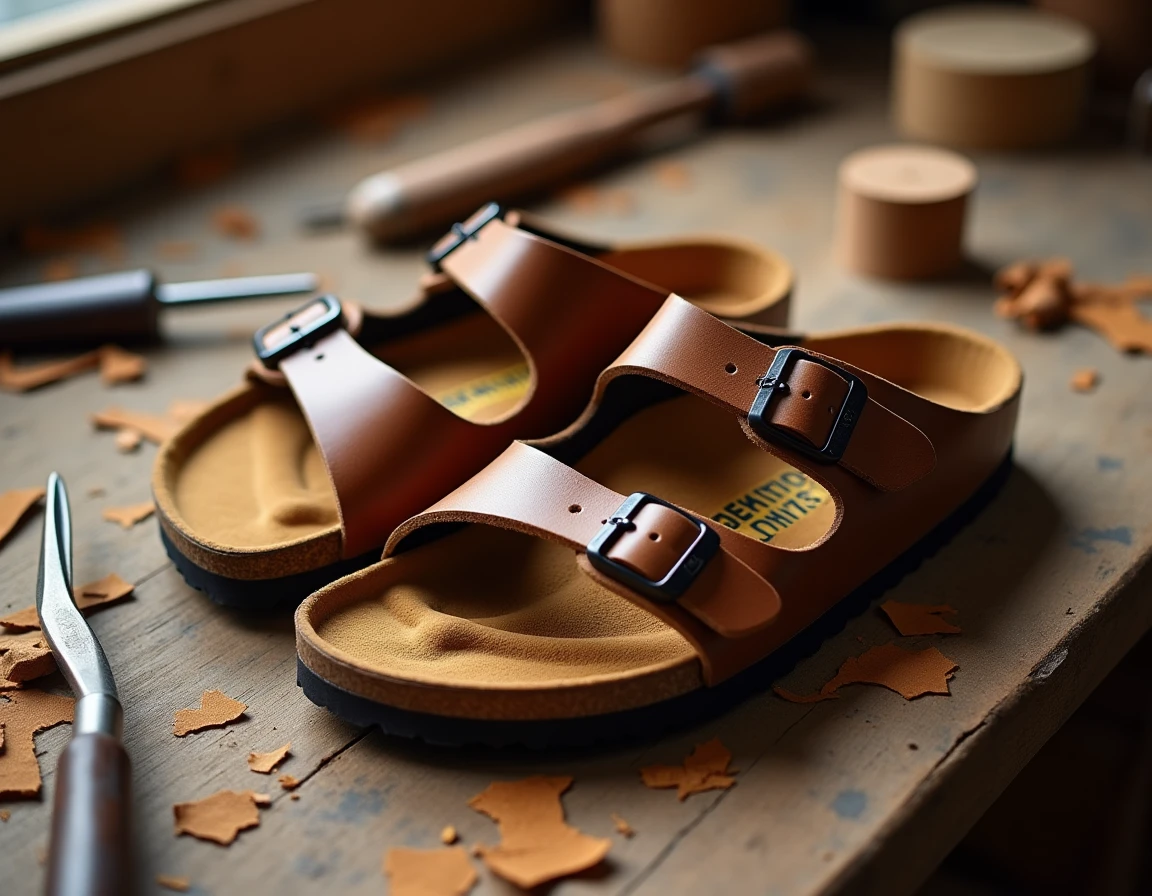
The price of a pair of Birkenstocks cannot be explained solely by cork, leather, or the anatomical sole. Since the brand’s IPO in October 2023 on the NYSE, the pricing policy responds to a premiumization logic driven by shareholder valuation objectives. Understanding this positioning requires going beyond the usual discourse on artisanal quality to examine the financial, industrial, and regulatory mechanisms that structure the final price.
Birkenstock IPO and premiumization: the NYSE pressure on the average price per pair
The entry into the NYSE has changed the game. The expected growth relies on the increase in the average price per pair, not just on geographical expansion. Financial analysts following the stock evaluate the brand based on its ability to upscale quarter after quarter.
This mechanism has direct consequences on the catalog. Entry-level models see their prices regularly adjusted, while new premium lines (full-grain leather, exclusive finishes) pull the average price upward. This is not a temporary increase related to raw material inflation: it is a structural margin strategy.
We observe the same phenomenon with other brands that have moved from the “functional” segment to the “premium lifestyle” segment after an IPO. The difference is that Birkenstock already had a foundation of orthopedic legitimacy that makes the upscale positioning credible in the eyes of consumers. To better understand why Birkenstocks are so expensive, one must look beyond the materials and consider this financial dynamic as a whole.

Birkenstock luxury collaborations: how Dior and Manolo Blahnik shift the psychological price
Collaborations with houses like Dior, Manolo Blahnik, or Valentino are not just marketing stunts. They act as a lever for price repositioning across the entire range.
Luxury co-branding raises the willingness to pay, even for non-collaborative models. When a Dior-branded Arizona is priced at several hundred euros, the standard model at just over a hundred euros suddenly seems reasonable. This price anchoring mechanism is documented in market studies of the “accessible luxury” segment.
Since the pandemic, these collaborations have shifted Birkenstock’s image from “comfort sandal” to that of a quasi-luxury brand. The result: a much higher acceptance of prices by consumers who, ten years ago, would have found it absurd to spend so much on a cork sandal.
The halo effect on the standard catalog
The impact is not limited to limited editions. Permanent lines benefit from a halo effect: better store placements, presence in fashion concept stores, visual association with luxury on social media. Each collaboration strengthens brand equity, allowing for price adjustments on references that have not changed in composition.
German manufacturing and European regulatory constraints on materials
Birkenstock maintains most of its production in Germany. This choice comes with a structural cost that brands manufacturing in Southeast Asia do not bear: social charges, environmental standards, and the cost of skilled labor.
The European regulatory pressure on materials and manufacturing adds another layer. REACH standards on chemical substances, increasing requirements for the traceability of leathers and adhesives, obligations related to supply chain due diligence: each regulatory tightening impacts the cost price.
- Solvent-based adhesives, which are cheaper, are gradually being replaced by formulations compliant with European restrictions, which are more expensive to produce
- The cork used for the soles comes from certified sources, with traceability requirements that limit supply sources and maintain raw material prices
- German labor specialized in assembling anatomical soles cannot be fully replaced by automation, which keeps the production cost high per unit
These constraints are rarely highlighted in commercial discourse. However, they weigh more heavily on the final price than the simple argument of “German quality” repeated everywhere.
Birkenstock anatomical sole: a technical know-how that justifies part of the price
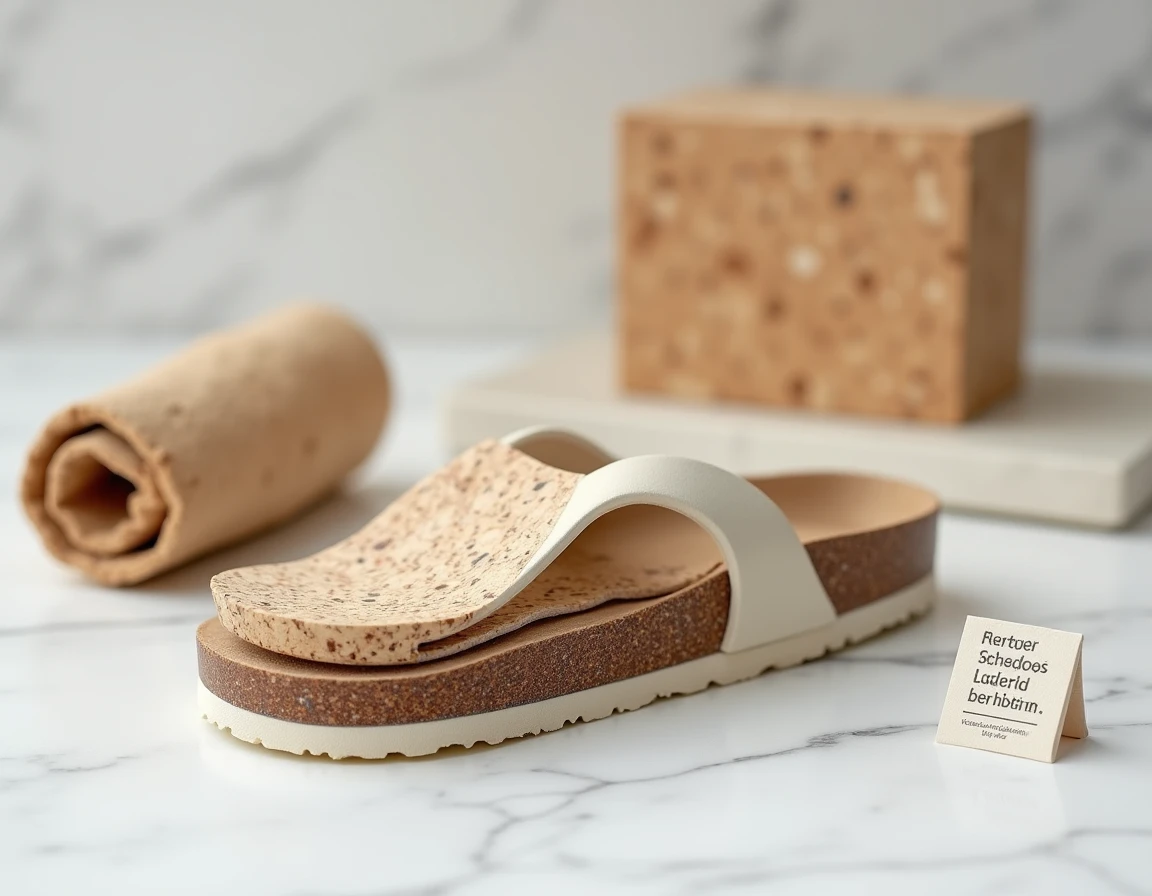
The inner sole made of cork and natural latex remains the flagship product of the brand. Its design is based on a three-point support molding (arch, metatarsal, heel) that differentiates Birkenstock from most competing sandals.
The manufacturing process of the inner sole involves several pressing and baking steps that cannot be accelerated without compromising the density of the material. The cork must reach a precise level of compression to provide the expected support while maintaining its ability to adapt to the foot over time.
This process partly explains the price differential with imitations. Copies typically use lower-density reconstituted cork or molded EVA, which reduces lifespan and foot support. A well-maintained Birkenstock lasts for several years, whereas a copy collapses in a few months.
Breaking in as an indicator of quality
The break-in time often mentioned by users (several days before the sole perfectly conforms to the foot) is not a defect. It is a sign that the cork is dense enough to deform slowly under foot pressure, rather than collapsing immediately. This compromise between initial rigidity and long-term comfort has a manufacturing cost that competing brands circumvent by using softer but less durable materials.
The price of Birkenstocks thus results from a combination of factors rarely examined together: post-IPO shareholder pressure, repositioning through luxury co-branding, European regulatory constraints, and a non-substitutable manufacturing process. None of these elements taken in isolation justifies the price. It is their combination that produces the price displayed in stores.