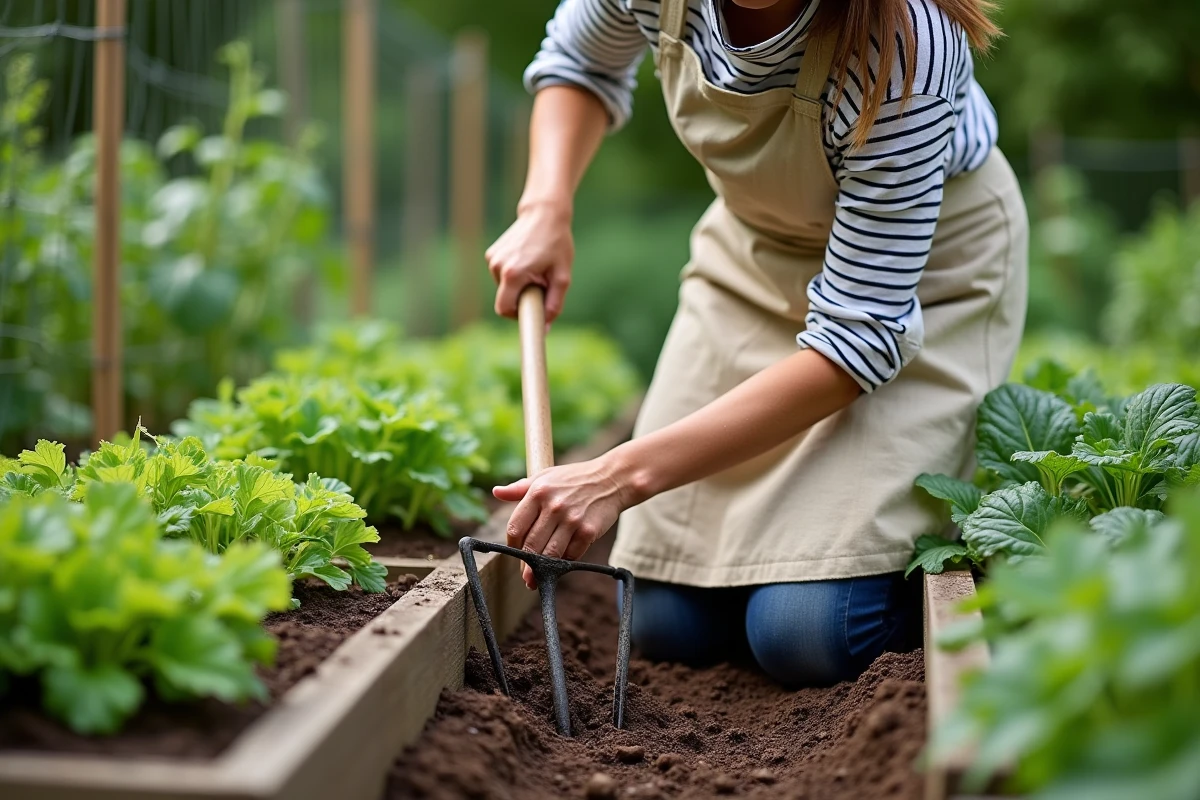
A productive organic vegetable garden relies less on the amount of work done than on how the soil is treated. Many gardeners turn the soil each year with a spade or tiller, without questioning whether this action harms what they are trying to nourish. The grelinette changes this logic: it aerates without turning, and the entire dynamics of the vegetable garden are altered.
Why the soil of the vegetable garden should not be turned
Have you ever noticed that soil turned with a spade forms compact clumps after a few weeks? This is not a coincidence. Traditional plowing inverts the layers of soil. The microorganisms that live on the surface become buried, and those adapted to depth are exposed to the open air. Both populations largely die off.
This underground life (bacteria, fungi, earthworms) is what makes soil fertile. It decomposes organic matter, fixes nitrogen, and creates channels that drain water. Turning the soil destroys the biological network of the soil. The result: soil that seems fine after being turned with a spade or tiller, but compacts and crusts over with the first rain.
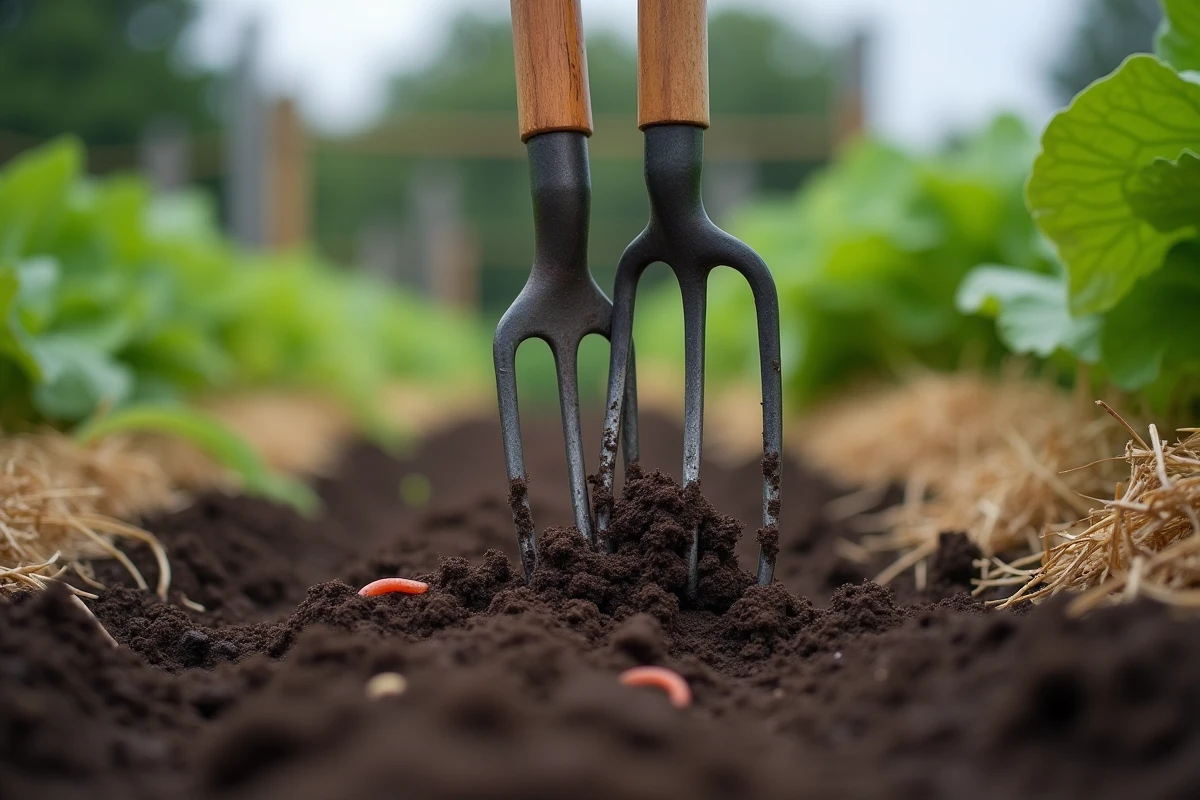
The grelinette works differently. Its tines penetrate the soil, lift it slightly, then release it. The layers remain in the correct order. The worm tunnels are not destroyed. The aeration work is done without disturbing the existing ecosystem.
Specialized resources like grelinette-warrior.com detail the differences between models and help choose a tool suitable for the width of your vegetable garden and the nature of your soil.
Grelinette: working technique and common mistakes
The tool has two handles and several tines (three, four, or five depending on the model). You insert it vertically into the soil by placing a foot on the crossbar, then pull the handles towards you to lift the soil. One pass is sufficient when the soil is regularly maintained.
The right gesture to aerate without tiring
Your body weight does the work, not your arms. If you have to force the handles to push the tines in, it means the soil is too dry or you are not pressing down enough with your foot. Wait a day or two after a light rain: the soil will be soft without sticking to the tines.
Step back with each pass to avoid walking on the already aerated area. This is a simple reflex that changes everything. Walking on soil you just decompacted negates the benefits of the work.
Three mistakes that limit effectiveness
- Using the grelinette as a lever to break clumps by forcing sideways. This movement twists the tines and compresses the soil instead of aerating it.
- Using the tool on waterlogged soil. The soil sticks, the tunnels collapse, and the structure degrades instead of improving.
- Neglecting to sharpen the tines. Dull tines require more force and penetrate clay soils poorly.
Good organic practices in the vegetable garden, season after season
The grelinette is just a starting point. A successful organic vegetable garden relies on a combination of practices that reinforce each other, year after year.
Cover the soil permanently
Exposed soil is degrading soil. The sun dries the surface, the rain compacts it, and weeds take hold. Mulching protects the soil and nourishes the life within it. Grass clippings, dead leaves, straw, hay: the organic matter laid down in layers decomposes slowly and enriches the soil without the need for tilling.
After a pass with the grelinette at the beginning of the season, spread a layer of mulch even before planting your vegetables. You will reduce watering and limit the emergence of unwanted weeds.
Companion planting to limit pests
Planting tomatoes next to basil is not just a cooking tip. Certain plant combinations disrupt pests with their scents or attract beneficial insects. Diversity in the rows replaces some treatments.
Some concrete principles:
- Carrots and leeks protect each other from their respective flies thanks to their crossed scents.
- Nasturtiums attract aphids away from vegetables and serve as trap plants.
- Legumes (beans, peas, broad beans) fix atmospheric nitrogen in the soil and benefit neighboring or subsequent crops.
Crop rotation and soil rest
Planting the same vegetables in the same spot each year depletes the specific nutrients that these plants consume. Changing the location of vegetable families each year also breaks the cycle of diseases and pests that overwinter in the soil.
A simple plan: divide the vegetable garden into three or four zones. Rotate the families (nightshades, legumes, cucurbits, alliums) from one zone to another. After a few years, the soil remains balanced without massive fertilizer input.
Maintaining the grelinette and preparing the soil for the long term
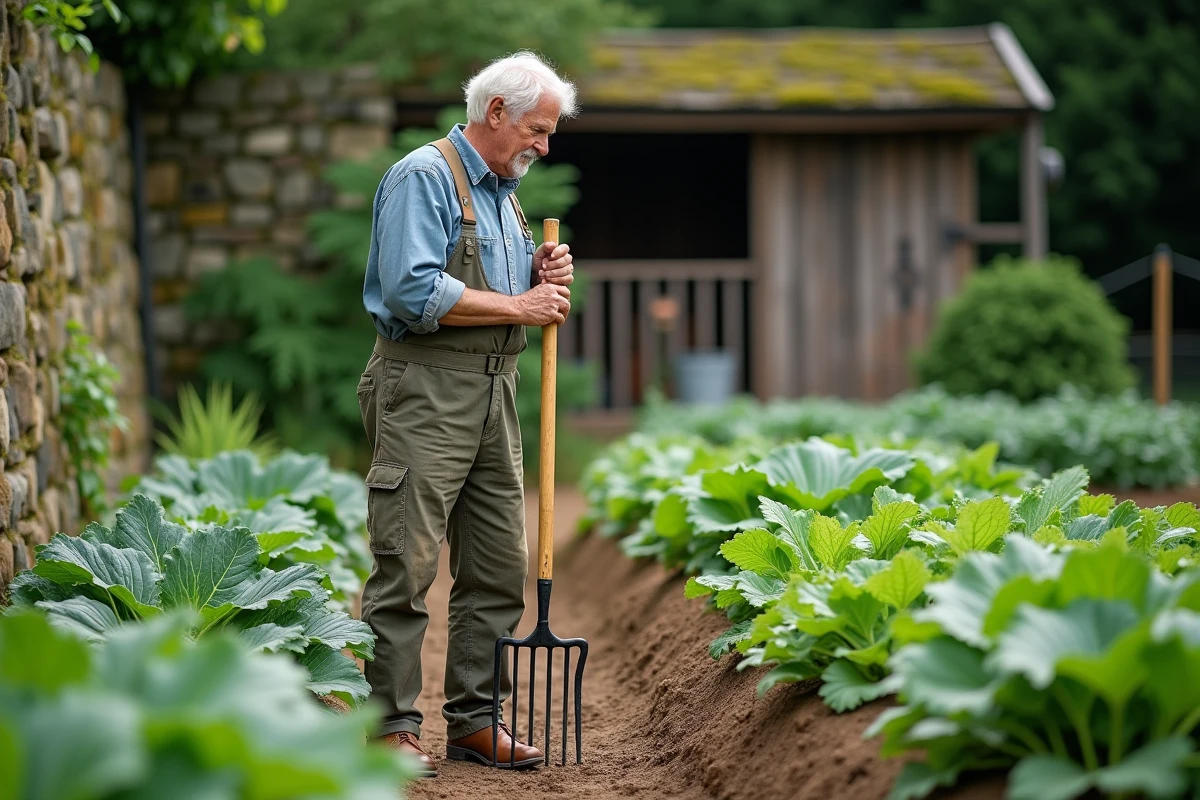
A well-maintained tool lasts for decades. After each use, clean the tines with a wire brush and wipe with an oiled cloth to prevent rust. Regularly check the tightening of the handles, especially on wooden-handled models.
The true benefit of the grelinette is measured over several years. A soil worked without turning gains structure over time. The layer of humus thickens, the soil becomes easier to work, and using the tool requires less and less effort.
By combining respectful soil work, regular mulching, and well-thought-out rotations, the organic vegetable garden works with life rather than against it. The grelinette is not just an improved rake: it is the tool that makes this approach possible, pass after pass, season after season.