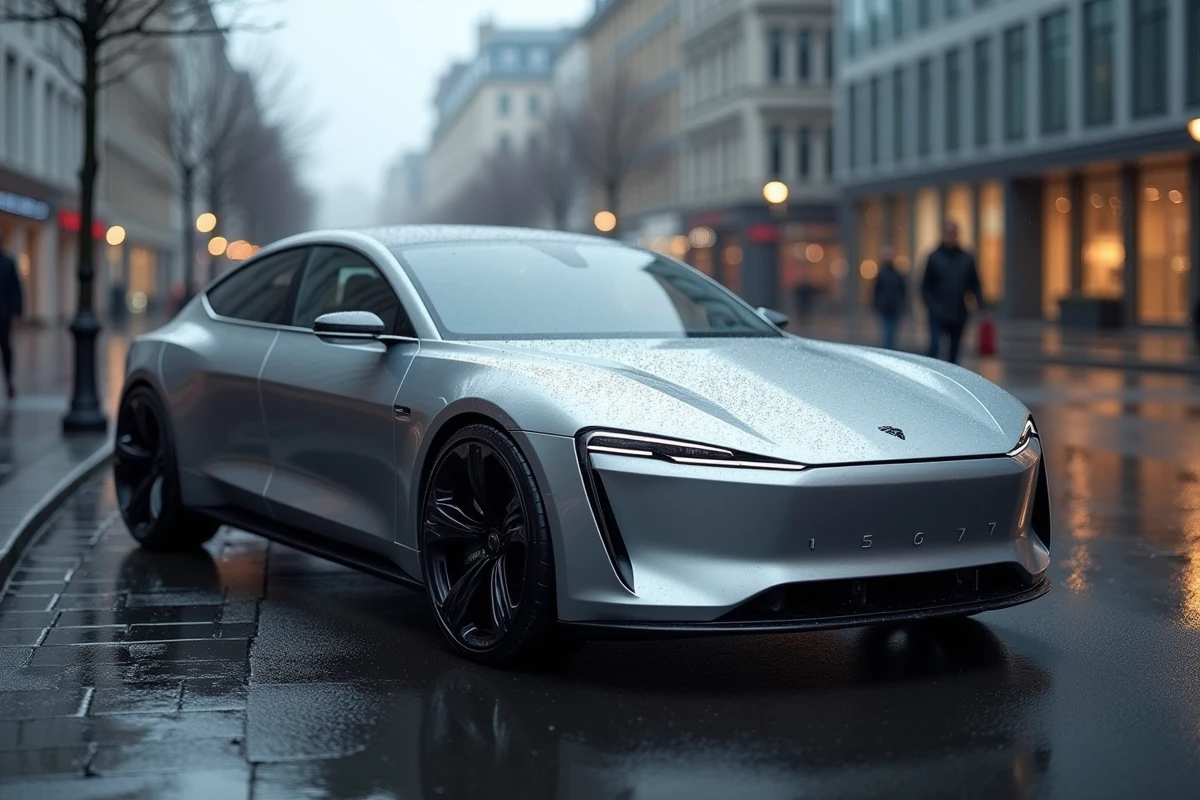
The year 2024 will mark a turning point in the industrial strategy of car manufacturers in Europe. Between regulatory adjustments, shifts in the electric vehicle market, and the reconfiguration of product ranges, the French auto market is undergoing a transitional phase where yesterday’s certainties no longer hold. The landscape is reshaping under the combined pressure of environmental standards, production costs, and a demand that is evolving more slowly than expected.
Euro 7 Standard and the Phased-Out of Thermal City Cars
The Euro 7 standard, although relaxed compared to the initial proposal from the European Commission, remains an additional cost factor for thermal engines. This extra cost directly impacts entry-level models, which already have thin margins. The result: several affordable gasoline city cars are disappearing from the catalogs.
Volkswagen has confirmed the discontinuation of the Up!, and Stellantis is gradually reducing its offering of micro-city cars. Ford and Renault have also communicated reductions in their gasoline catalogs, mentioned in their 2023-2024 annual reports. To follow the latest from Le Blog Auto Mag, these range restructurings have been a constant news thread since the beginning of the year.
The ACEA (European Automobile Manufacturers Association) published analyses in 2024 highlighting that this regulatory pressure is accelerating the removal of thermal models that no longer justify the investments needed for compliance. The segment of affordable small cars, historically strong in France, finds itself caught in a vise.
Manufacturers’ Electric Strategy: The Unexpected Setback of 2024
The dominant narrative since 2020 has been simple: manufacturers were preparing to switch to fully electric vehicles. The year 2024 has shown that this trajectory is not linear. Ford has postponed several major investments in 100% electric vehicles, citing a slowdown in demand and rising production costs for batteries.
Mercedes-Benz has pushed back its initial target for exclusively electric sales from 2025 to 2030. Volkswagen has revised down its production forecasts for electric vehicles for the period 2024-2026. These announcements do not signify an abandonment of electric vehicles, but rather a pragmatic recalibration in response to market realities.
Hybrids Gaining Ground Against Fully Electric Vehicles
This setback benefits hybrid powertrains. Toyota, which has never bet on fully electric vehicles in the short term, sees its hybrid strategy reinforced by sales figures. Stellantis is reintroducing hybrid variants on models originally planned to be electric only.
Plug-in hybrids and mild hybrids are capturing an increasing share of the market, particularly among buyers who are still hesitant to make the leap to pure electric. The charging infrastructure, although developing, remains insufficient in some rural areas of France to alleviate all hesitations.
- Ford, Mercedes-Benz, and Volkswagen have each postponed or softened their goals for transitioning to fully electric vehicles during 2024
- Toyota maintains a multi-energy approach that includes hybrid, plug-in hybrid, and hydrogen alongside electric
- Stellantis is reintroducing hybrid versions on platforms originally designed for fully electric vehicles
SUVs and Chinese Electric Vehicles: Pressure on the French Market
The SUV segment remains dominant in France in 2024, but the nature of the competition has changed. Chinese manufacturers like BYD and MG (owned by SAIC) are offering electric SUVs at significantly lower prices than European brands. This pricing pressure has prompted the European Union to impose additional tariffs on electric vehicles imported from China, which came into effect in 2024.
European tariffs on Chinese electric vehicles are reshaping the pricing competition. Field reports vary on the actual effectiveness of this measure: some Chinese models remain competitive despite the surcharge, while others are repositioned in higher segments to absorb the extra cost.
On the French side, Peugeot has launched the e-3008 in direct response to this offensive. Renault is betting on the Renault 5 E-Tech to reclaim the segment of affordable electric city cars. These two models embody the strategy of national manufacturers: to offer electric vehicles made in Europe, at prices that are still higher than those offered by Chinese brands.
2024 Ecological Bonus in France: A More Restrictive Framework
The ecological bonus has been reduced in 2024, with stricter allocation criteria. The environmental score, which now incorporates the carbon footprint of the vehicle’s manufacturing and transport, effectively excludes most models assembled in China. This measure has a dual effect: it partially protects the European industry, but it reduces the number of electric models eligible for public aid.
For buyers, the economic calculation has become more complicated. The average price of a new electric vehicle remains high compared to an equivalent thermal or hybrid vehicle. The used electric vehicle market is developing, but the available data does not yet allow for conclusions on the residual values of batteries in the medium term.
- The environmental score excludes the majority of electric vehicles manufactured outside Europe from the French ecological bonus
- Models from Peugeot, Renault, and Citroën produced in France or Europe remain eligible for aid
- The used electric vehicle market is growing, but guarantees on battery condition vary significantly from one manufacturer to another
The automotive news of 2024 is not just a race towards electric vehicles. It tells the story of an industry adjusting its ambitions to the constraints of reality: shifting regulations, increased international competition, and consumers weighing budget, range, and practicality. Product ranges are being reconfigured around hybrids and accessible electric vehicles, two segments that are likely to continue shaping the market in the years to come.