
Selling your home does not always mean moving. Some CAF benefit recipients who sell their property continue to live in the same home, for example after a life annuity sale or when one partner buys out the other’s share as part of a separation.
The sale itself is not an event that the CAF classifies as a “move.” The steps to take therefore depend on what actually changes in the recipient’s day-to-day life: their address, income or household composition.
Selling without moving: what the CAF actually expects
The CAF’s online declaration process includes sections for “housing” and “personal circumstances.” If a homeowner sells their property but stays in the same home, there is no new address to report. The CAF does not have a specific “property sale” form: it is the consequences of the sale that determine whether a declaration is required.
In practical terms, if the recipient does not receive housing benefit and their family circumstances remain unchanged, the sale alone does not change their CAF file. A seller who continues to live in the property does not need to report a change of address for this reason alone. However, depending on the benefits they receive, the CAF may later ask for information about the proceeds.
One point calls for caution: publicly available information does not establish that the proceeds from a sale never affect benefits. How this capital is treated may vary depending on the benefit concerned (RSA, AAH, family allowances). Recipients should contact their CAF office to check how it may affect their specific entitlements.
To report the sale of your home to the CAF, start by going to the “Report a change” section, available from your Mon Compte account or the mobile app.

Moving after a sale: CAF steps for your new home
The situation changes significantly when the seller moves out of the property. Two separate declarations are then required, and confusing them can delay the processing of your file.
- Report your change of address in the CAF “Mon Compte” section as soon as you know your new address. If the move takes you to a different département, this update transfers your file to the correct local CAF office.
- Apply for or update your housing benefit (APL, ALS, ALF). You will need to provide details about your new home, including its floor area, rent and type of lease. Without this second step, housing benefit does not automatically transfer from one property to another.
- Report any change in your family circumstances that occurs at the same time, such as a separation or a change in household composition, as selling a shared home often goes hand in hand with a change in the household.
The CAF’s updated housing process makes it easier to enter these details by bringing them together, but recipients are still responsible for providing all the required information on time.
Reporting deadlines and the risk of overpayments
A delay does not prevent you from correcting your file: the “Report a change” section is available at any time. Any overpayment must be repaid, even if the mistake was made in good faith. The CAF applies this rule systematically, including when the recipient did not know a declaration was required.
The most common risk involves housing benefit paid for a property the recipient no longer lives in. If APL payments continue after the sale and move, the CAF will recover the amounts paid in error from future payments or by issuing a repayment notice.
Proof of sale and online declarations: what is actually required
The CAF states that no documents need to be submitted for certain changes reported online. This general guidance does not guarantee that supporting documents will never be requested for a file involving a property sale. In practice, the documents required depend on the benefit concerned and the recipient’s circumstances.
The preliminary sales agreement or deed of sale is not a standard document in a CAF file. However, the CAF may request it as part of an audit or income check. It is sensible to keep these documents, but there is no need to send them unless asked.
Reporting online or at a local office
The CAF’s preferred method is to report changes online via caf.fr or the “Caf – Mon Compte” mobile app. The process involves answering a few questions about the type of change. Recipients who cannot use these tools can still make an appointment at a local office.
One point to bear in mind: if your move takes you to a different département, your file will be transferred to the new CAF office. This transfer can take several weeks and temporarily suspend payments. Reporting the move before it takes place can help reduce the delay.
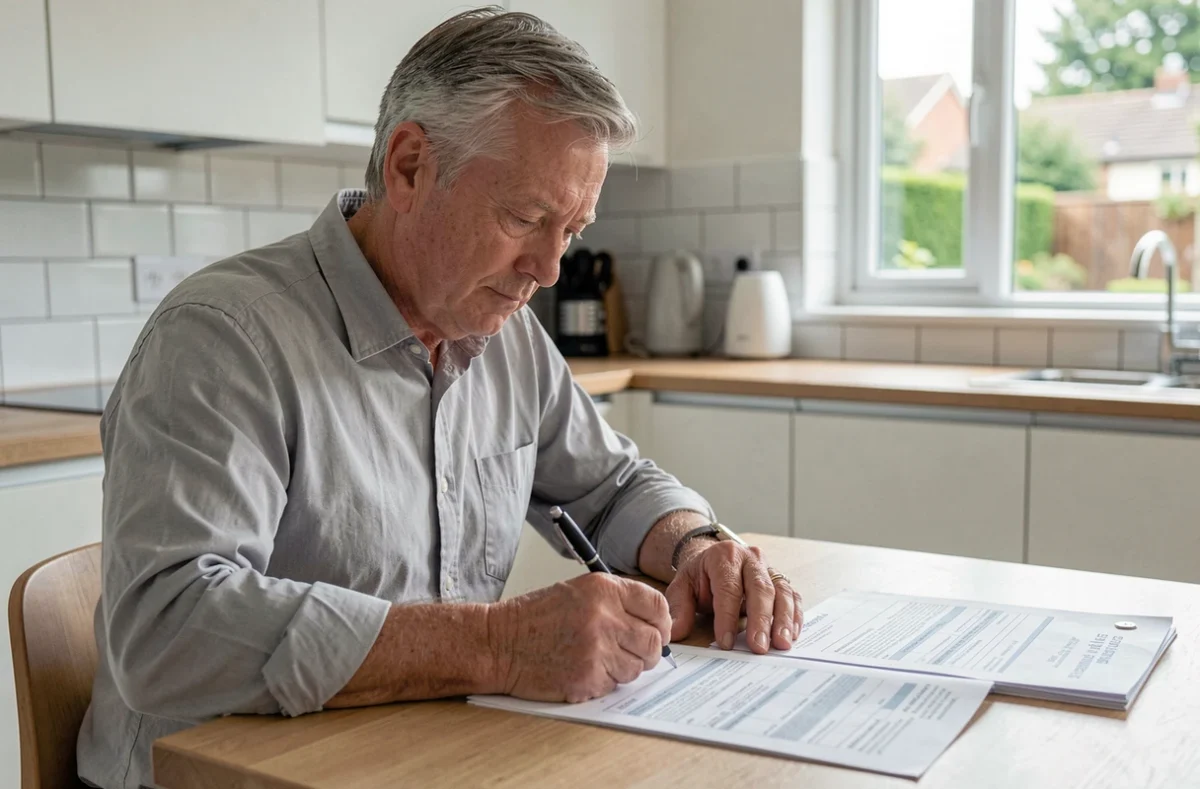
Sale proceeds and CAF benefits: a question that needs to be clarified on a case-by-case basis
For sellers, the most sensitive question is how the proceeds from the sale may affect their benefits. The income considered by the CAF varies depending on the benefit: RSA takes certain uninvested capital into account, while family allowances are based on income reported to the tax authorities. There is no single rule that applies to every situation.
For RSA, certain capital that does not generate income may be assessed on a flat-rate basis. This means that the proceeds from a property sale may affect the amount of the benefit if they are not reinvested in a new home. APL, by contrast, is calculated using reference taxable income, so the impact may be delayed.
Given the range of rules, the only reliable approach is to contact your CAF office directly, specifying which benefit you receive and the approximate amount of the transaction. Advisers can estimate the impact on your file and tell you whether an additional declaration is needed.
Selling your home therefore does not trigger a single set of CAF procedures. The steps to take depend entirely on what happens after the sale: staying in the home, moving, a change in family circumstances, or receiving capital that changes the household’s resources. Each situation needs to be checked separately, and the safest approach is to contact your CAF office before signing the final deed.